




What Is Kafta? Understanding Mediterranean Kebabs
Order from a Mediterranean grill and you will meet four or five words that seem to describe the same thing. They do not. Here is what each one actually means.
Kebab is a category, not a dish
The word simply refers to meat cooked over fire. Everything below is a kind of kebab. Asking for “a kebab” is a bit like asking for “a roast” — the kitchen still needs to know which one.
The sharp, the creamy and the rich are not decoration. They are meant to be eaten together in the same mouthful.
Kafta
Ground meat, mixed with grated onion, chopped parsley and spices, pressed by hand around a skewer and grilled. The mix is the craft: too lean and it dries out, too wet and it slides off the skewer.
Kafta should be juicy, well seasoned and taste noticeably of parsley and onion, not just of meat. It is the most common kebab across the Levant and usually the cheapest, which has nothing to do with quality.
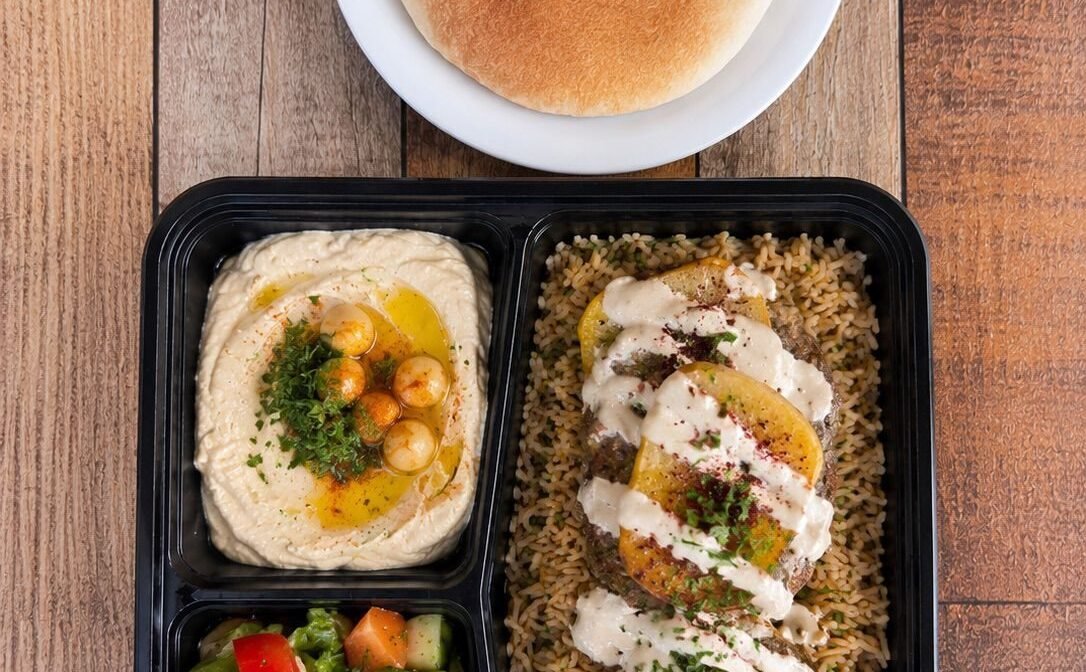
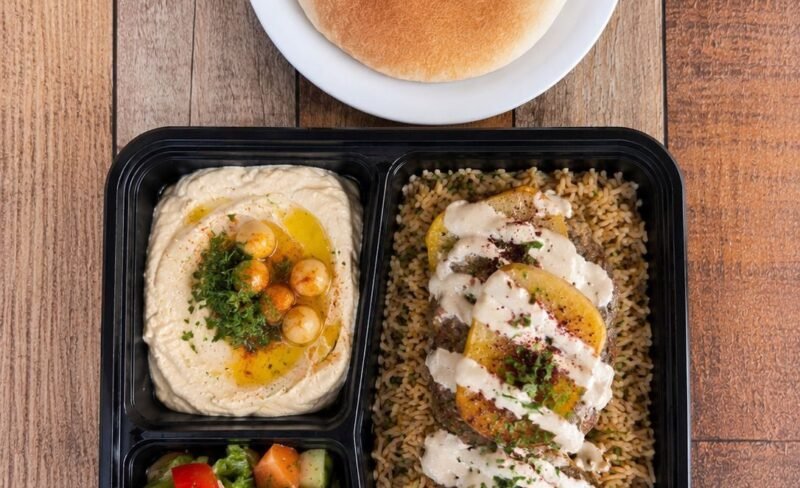
It also turns up baked rather than grilled — laid in a tray under tahini sauce and roasted, which gives something softer and nuttier than the grilled version.
Shish kebab
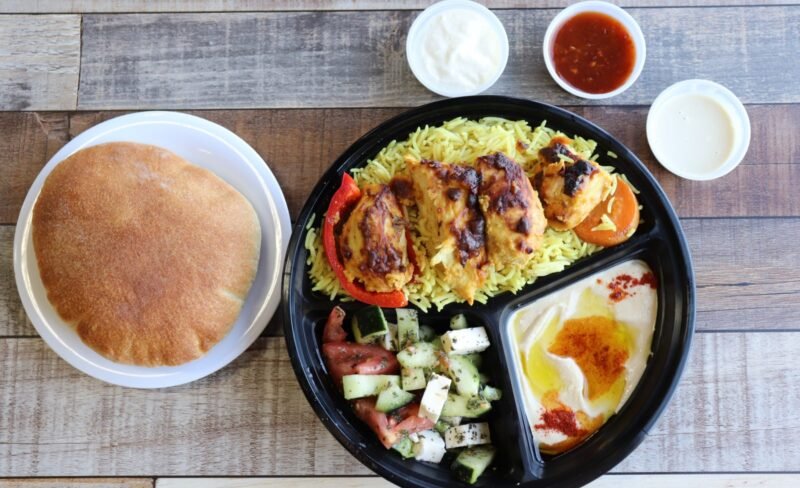
Cubes of whole muscle meat, marinated and threaded onto a skewer, often with peppers or onion between them. Where kafta is ground, shish is chunks. Chicken kebab in most kitchens means this: marinated cubes of chicken over fire.
Because it is whole meat, the marinade and the timing do all the work. Overcooked shish is dry in a way that overcooked kafta is not.
Gyro
Seasoned meat stacked in layers on a vertical rotisserie, cooked slowly as it turns, and shaved off in thin slices as the outside crisps. The Turkish equivalent is doner, the Arab equivalent shawarma. The principle is identical.
The texture is the giveaway: thin ribbons with crisp edges, rather than pieces or patties.
What to order if you are new to it
If you like burgers, start with kafta. If you prefer grilled chicken breast, chicken kebab will feel familiar. If you want the thing that tastes most distinctly of a Mediterranean high street, order gyro.
All of them are traditionally served the same way: over rice or with bread, with a salad to cut the fat, a dip, and a sauce. That combination is not decoration — the sharp, the creamy and the rich are meant to be eaten together in the same mouthful.